Leadership
Inspired vs Motivated: The Leadership Distinction That Changes Everything
Carlo Santoro has led RetailCare through two decades of growth, a global pandemic, and a complete AI-first transformation — all with a team of 14. Here is the leadership distinction that made more difference than any strategy, system, or framework he has ever used.
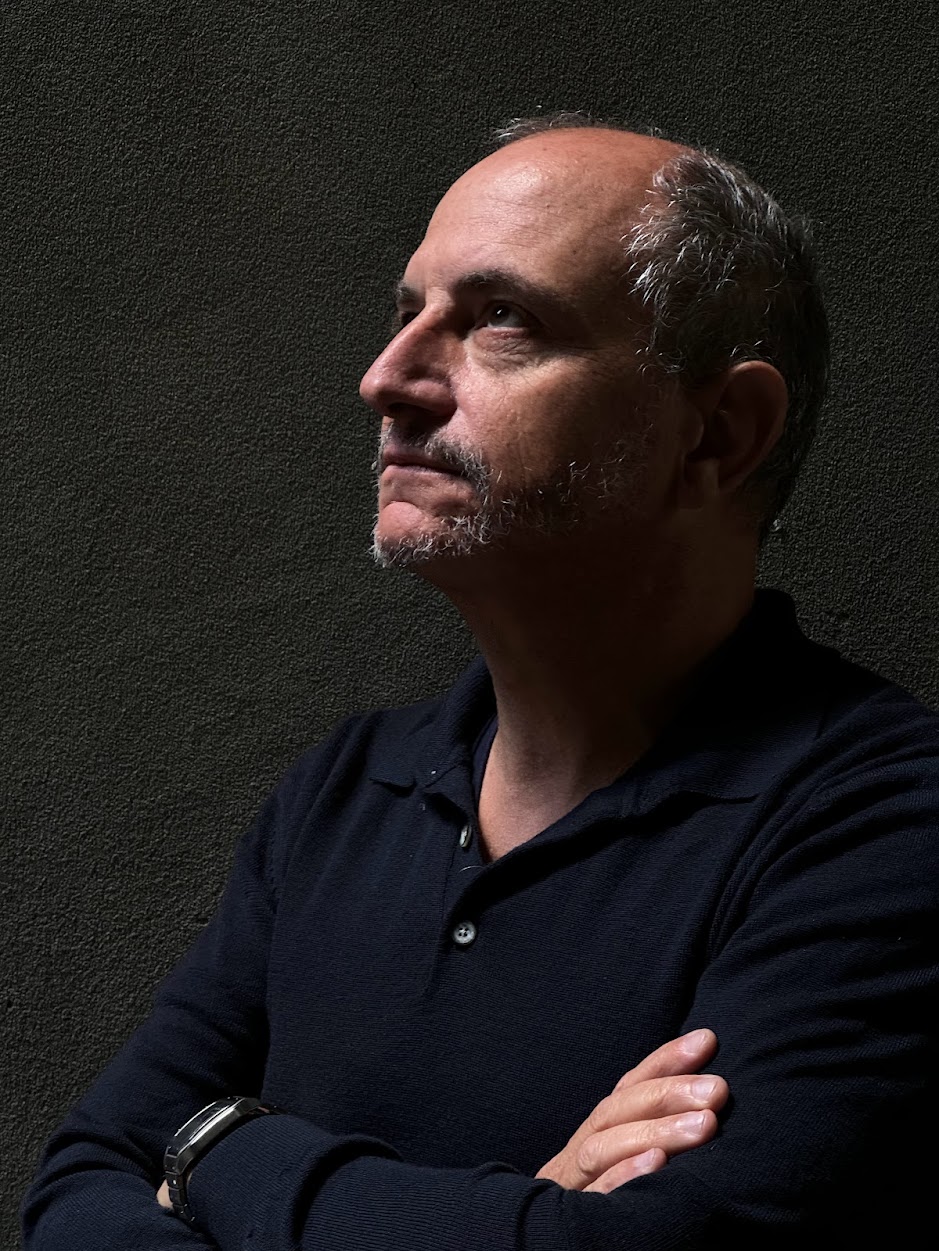
Carlo G. Santoro
Entrepreneur · Speaker · Author · 20 min read
May 18, 2026
172
Views
0 min 01 sec
Avg. time on page
Language
39Views
20 minRead Time
I want to tell you about a moment I have watched happen hundreds of times — in my own business, on my own team, and in the leadership rooms I have sat in across more than 30 countries.
Someone's alarm goes off. They lie there. And then one of two things happens. Either something external — an obligation, a deadline, a fear of consequence — finally pushes them upright. Or they were already awake, legs already swinging out, because something internal had been pulling them toward the day before the alarm even sounded.
I am the founder and CEO of RetailCare, an Australian-based retail technology company. We are a global business with a team of 14 — and in the past three years we have gone through a complete AI-first transformation, rebuilding almost every system, every product, and every workflow around artificial intelligence. I have also been a founding EO Melbourne member since 1996, facilitated more than 500 Forums across more than 30 countries, and trained more than 11,000 members. And across all of it, I have come back to that single morning moment as the most honest diagnostic for how someone is actually operating.
If you need to wake up in the morning, you need motivation. If you are already getting up, you are seeking inspiration to reach the next level. The difference is everything. — Carlo Santoro
Most leadership conversations treat motivation and inspiration as synonyms — warm, interchangeable words for the same feeling you get from a TED Talk or a motivational poster. They are not the same thing. They work differently, feel differently, produce different outcomes, and critically for leaders — they require entirely different techniques. Understanding the distinction is not academic. It is one of the most practical things a leader can know.
Defining Our Terms
The word motivation comes from the Latin movere — to move. At its most elemental, it is an external force that causes movement. A deadline motivates you. A threat motivates you. A reward motivates you. Remove the deadline, the threat, the reward — and the movement often stops.
The word inspiration comes from the Latin inspirare — to breathe into. It comes from within, ignited perhaps by something external, but the combustion itself is internal. When you are inspired, you do not need someone else in the room. You would do it alone, at 2am, in silence, with no audience.
In NLP we talk about the map and the territory. Your map is your internal representation of reality. When someone motivates you with a reward or a threat, they are handing you their map of what should matter to you. The effect lasts only as long as their map stays relevant. Inspiration works differently. It changes the map itself. It rewires how you see your own situation, your own potential, your own story. That is why it lasts.
Motivation gives you someone else's map. Inspiration changes your own. That is why one lasts a day and the other can last a decade. — Carlo Santoro
Research backs this up powerfully. Edward Deci and Richard Ryan's Self-Determination Theory identifies three core psychological needs that drive genuine intrinsic motivation: autonomy, competence, and relatedness. Inspiration activates all three simultaneously. Traditional external motivation satisfies none of them — and can actually undermine intrinsic drive, a finding researchers call the crowding-out effect. Daniel Pink's Drive makes the same point: what actually drives high performance is autonomy, mastery, and purpose — and purpose is entirely the domain of inspiration.
The Morning Test: Push vs Pull
The Morning Test is the most honest diagnostic for where someone is operating. The person who needs motivation in the morning is not a bad person. They may be deeply capable. But they are operating in a push paradigm — something external must create the movement.
The Push–Pull Spectrum
From external trigger to self-generating momentum
ObligationShow up because you have to
Reward / FearWorks until removed
EngagementTransition zone — where leadership matters most
PurposeStory and meaning are activated
InspirationSelf-generating — you would do it without an audience
The person who is already up — who woke before the alarm because their mind was full of possibility — does not need motivation. At RetailCare, I have team members building AI systems at 11pm not because I asked them to, but because they are genuinely pulled toward what we are building. Motivating them would be almost insulting. What they need is inspiration: a bigger canvas, a bolder vision, a story that connects their present effort to a future that genuinely excites them.
The profound insight here is that great leaders do not apply one approach universally. They diagnose first. Is this person in push mode or pull mode right now? And they calibrate accordingly. Read the room. Then lead it.
Solo vs Collective: Where Each Force Lives
One of the most underappreciated distinctions in leadership science: motivation is primarily a collective phenomenon, while inspiration is primarily individual.
Watch what happens at a sporting event, a political rally, or a company all-hands. Energy builds as the group grows. Chanting, shared physical presence, competitive pressure — these amplify motivational states. One person alone in a quiet room feels almost none of this.
Inspiration works in reverse. It is often most powerfully felt in solitude. A person reads a biography at midnight and decides to change their life. They carry the story inside them — and it fires every time they return to it. In NLP, we call this an anchor: a stimulus that reliably produces a state. A great story becomes a permanent anchor. It does not need the storyteller in the room to keep working.
Motivation is something felt as a group. Inspiration is something you do on your own. One needs a crowd. The other needs only a story told at exactly the right moment — and it never stops working. — Carlo Santoro
The Dangerous Illusion: Feeling Motivated Without Acting
Here is one of the most important — and most inconvenient — truths in leadership: motivation can be fully experienced without producing a single action.
Research from the Journal of Applied Psychology suggests that up to 70% of people who report feeling highly motivated by a training or development event show no measurable behaviour change sixty days later. The emotional spike occurs. The action does not follow.
Inspiration behaves differently. Because it is connected to identity — to who you understand yourself to be — it does not evaporate as quickly. When I took RetailCare through our AI-first transformation, I told them a story about the world we were building toward — a business where AI did the repetitive work and every person on the team was freed to do the work only a human could do. That story became part of how they saw themselves. It outlasted every deadline.
Both Are A Choice — And That Changes Everything
Here is the piece most people miss entirely: both inspiration and motivation are choices. Not feelings that happen to you. Choices you make. Stances you adopt. Identities you inhabit.
Inspiration and motivation are choices. Both are frequencies you can tune into. Tuning is a skill, not a gift — and it is a skill every leader can teach to the people around them. — Carlo Santoro
The Personal Trainer and the Storyteller
Think of the personal trainer. A great PT is, functionally, a motivation machine. They set the alarm, create accountability, structure the session, push you past the threshold where you would have stopped alone. The limitation is that their power depends on their presence. When the PT is not there, many clients regress.
Now think of the storyteller. The great storyteller does not need to be in the room. Their story lives inside you. You carry the narrative of the person who overcame the impossible. You return to it in your darkest moments not because the storyteller is standing there — but because the story became part of you. It is a permanent anchor.
Motivation is sometimes yelled at you from a PT. Inspiration is always delivered through a story. One needs a voice in the room. The other only needs a story told well — and then it never leaves. — Carlo Santoro
The Stick vs The Story: Two Leadership Philosophies
Leadership Approach Matrix
Knowing when to motivate — and when to inspire
Use Motivation When…
- The relationship is hierarchical
- The team needs structure and accountability
- Urgency and execution are the priority
- New team members are learning their role
- Clear targets, clear consequences
Use Inspiration When…
- The relationship is peer-to-peer
- The individual needs vision and meaning
- Long-term growth is the goal
- Leading equals in EO Forum or a boardroom
- Unlocking potential not yet realised
At RetailCare I use both every week. When we are shipping a product update against a client deadline, I am running a motivated team. When I am sitting with a senior developer deciding whether to stay and grow with us, I put down every motivational tool I have. I tell them a story about where we are going. Only one of those conversations creates loyalty.
Becoming a Masterful Storytelling Leader
If inspiration is the destination, storytelling is the only road that leads there reliably. Uri Hasson's Princeton research showed that neural coupling between speaker and listener was directly measurable. Paul Zak's research shows that character-driven stories with emotional tension reliably trigger oxytocin release — the neurochemistry of trust, empathy, and prosocial action.
- Live a story worth telling. Authenticity is the foundation. The most powerful narratives leaders tell are stories of their own failures, pivots, and resurrections.
- Study the structure of great stories. Every great story follows a form: a protagonist who wants something, faces opposition, is transformed by the struggle. Joseph Campbell called this the monomyth.
- Tell stories at the right moment. A story told at the wrong time is just an anecdote. The inspired leader reads the emotional landscape of the room and provides exactly the story that pushes someone through their breakthrough.
The Evidence: KPIs That Matter
Global Engagement23%Of workers worldwide feel genuinely engaged at work (Gallup, 2023)
Performance Uplift225%Inspired employees are 2.25× more productive than merely satisfied ones (HBR, 2015)
Training Change Gap70%Of people feel motivated by training but show no behaviour change 60 days later
Disengagement Cost$8.8TAnnual global cost of employees who are present but uninspired (Gallup, 2023)
Retention Improvement55%Inspired employees are 55% less likely to leave within 12 months (Deloitte, 2022)
Innovation Output3×Purpose-driven teams generate three times more innovation output (McKinsey, 2021)
The Greatest: Inspiring Leaders and Master Motivators
The Greatest — Who Inspired and Who Motivated
The Great Inspirers
01
Nelson Mandela27 years imprisoned and emerged with a story about forgiveness that inspired a nation.
02
Steve JobsNever sold products — sold a story about people who think differently. Pure narrative.
03
Martin Luther King Jr."I Have a Dream" — a masterclass in narrative transportation.
04
Brené BrownRedefined vulnerability as a leadership superpower through personal story.
05
Viktor FranklSurvived Auschwitz and wrote Man's Search for Meaning — purpose over circumstance.
06
Simon SinekMade the Why-first approach accessible. His Golden Circle model is a storytelling framework.
The Great Motivators
01
Tony RobbinsDefining figure of the motivation industry. Master of collective energy and physical state.
02
Winston ChurchillA rare figure who operated powerfully in both domains — wartime speeches motivated and inspired.
03
Vince LombardiThe definitive study in sports-based motivation. Transformed the Green Bay Packers.
04
Eric Thomas (ET)Known as "The Hip Hop Preacher" — one of the most energetically effective speakers of the modern era.
05
David GogginsThe hard-edge school of accountability-based motivation — extreme ownership as primary mechanism.
06
Jocko WillinkFormer Navy SEAL. His Extreme Ownership framework is the most operationally specific motivation system for high-performance teams.
The Leader You Are Becoming
The leaders who build the most resilient teams, the most committed cultures, and the most enduring businesses are not the loudest motivators. They are the most honest storytellers.
Become that leader. Live a story worth telling. Tell it with your whole self. Trust that the people around you who are ready will catch the flame. And they will still remember it a decade from now.
If you want to inspire others to greatness, you must become a great storyteller. Storytelling is not a soft skill. It is the hardest and most powerful leadership skill there is — and the only one that works in a room full of equals. — Carlo Santoro
Comments
Join the conversation
0 approved comments
Leave a comment
Keep it respectful and on topic. Comments post immediately.